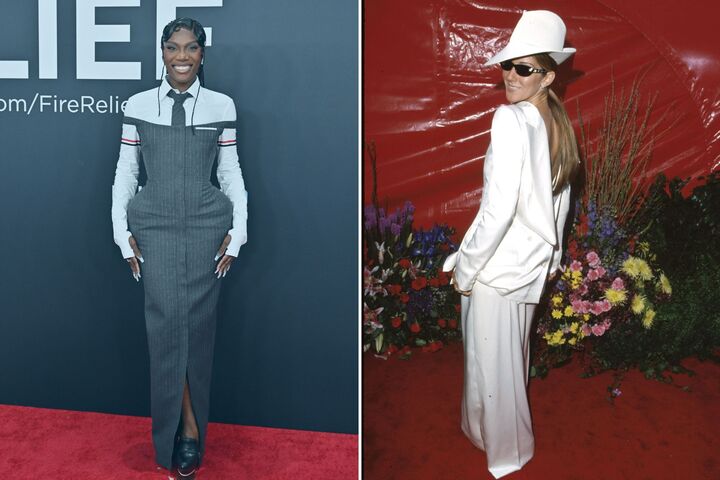
The Met Gala theme dropped with its usual fanfare—cryptic, poetic, and open-ended. This time, the veil of clarity was thinner than ever. No sharp directive, no historical decade, no movement to latch onto. Just a whisper of inspiration that sent stylists scrambling: how do you dress a star for a theme that refuses definition?
From sheer illusion gowns that flirt with nudity to tailored homages to da Vinci’s enigmatic muse, the interpretations are as varied as the stars themselves. The absence of rigid guidelines has become the ultimate challenge—and the most exciting creative opportunity in years.
Here’s how top celebrity stylists are navigating this ambiguity, turning fog into fashion.
Why This Year’s Theme Is the Trickiest Yet
Unlike past themes like “Camp: Notes on Fashion” or “Heavenly Bodies,” which came with visual vocabularies and historical reference points, this year’s prompt is more mood than mandate. There’s no checklist of motifs, no clear nod to a movement or era. That freedom is exhilarating for some, paralyzing for others.
“It’s like being told to ‘be creative’ without a brief,” says Lila Torres, stylist for Florence Pugh and Paul Mescal. “You have to invent the assignment before you can complete it.”
The risk? Misalignment. Arriving at the Met steps in a look that’s stunning—but feels disconnected from the collective vision—is a career misstep no stylist wants.
The ambiguity also amplifies scrutiny. Fashion editors, fans, and critics alike will parse every detail: Is that sheer panel a tribute to vulnerability as art? Or just another naked dress? Is that structured blazer with a hidden Mona Lisa print a genius nod to hidden meaning—or a stretch?
The Naked Dress Debate: Still Relevant or Redundant?
Sheer, flesh-toned mesh. Strategic embellishments. The “naked dress” has graced the Met steps more than once—Rihanna’s Guo Pei yellow gown may be regal, but Kim Kardashian’s wet-look Balmain sheer at the 2019 Gala set a new standard for skin-as-canvas.
This year, some stylists see the naked dress not as a fallback, but a deliberate commentary.
“If the theme is about truth, perception, or illusion,” says Marcus Reed, who styles Rami Malek and Ana de Armas, “then the naked dress becomes a powerful statement. It’s not about exposure—it’s about visibility. About what we choose to reveal.”
But others are wary of repetition.
“We’ve seen it,” says stylist Naomi Chen. “And unless there’s a twist—a narrative, a construction that reframes it—it risks feeling lazy. The Mona Lisa has a smirk. The naked dress shouldn’t just smirk back.”
The winning approach? Subversion. One A-lister’s look in development features a full nude illusion gown—except the “skin” is hand-painted with miniature Renaissance landscapes, turning the body into a living gallery.
Enter the Mona Lisa Suit: Fashion Meets Fine Art Subtext
While some lean into the body, others are leaning into the brain. The Mona Lisa—her expression, her history, her theft, her ubiquity—has become a surprising north star for several stylists.
Not literal recreations (though one avant-garde designer is rumored to be embedding a micro-display of the painting into a cape), but conceptual interpretations.
“She’s the original influencer,” says Torres. “No filters, no captions—just presence. That’s the energy we’re channeling.”
One male client is expected to wear a midnight-blue tuxedo with an asymmetrical lapel shaped like the Mona Lisa’s contour, embroidered in near-invisible silver thread. From a distance, it reads as elegant minimalism. Up close, it’s a whisper of art history.
Others are exploring her ambiguity.
“The theme is vague? Good,” says Reed. “So was she. That’s the point. The smile. The gaze. The unanswered questions. Fashion can do that too.”
Result: looks that play with perspective—mirrored fabrics, layered veils, garments that shift under light or movement. One gown in development uses thermo-reactive fabric that changes opacity as body heat rises, revealing hidden portraits beneath the surface.
How Stylists Are Researching the Unresearchable
With no clear design canon to follow, stylists are diving into atypical sources.
- Art theory papers on the psychology of ambiguity
- Film analysis of characters with hidden motives (Gone Girl, The Last Jedi’s Luke Skywalker)
- Philosophy texts on perception and truth (Nietzsche, Barthes)
- Museum archives of unfinished artworks—pieces where the artist’s intent is unclear
“We’re not just dressing a body,” says Chen. “We’re dressing an idea. And sometimes, the best ideas are the ones that don’t resolve.”
Stylists are also holding “mood wars”—collaborative sessions where they pitch opposing interpretations: one argues for maximalist transparency, another for concealed symbolism. The goal? To stress-test concepts before they reach the atelier.
One practical tool: the “Met Test.” A checklist applied to every draft design:
- Does it provoke a second look?
- Does it reward scrutiny?
- Could it be read two ways?
- Does it feel inevitable and surprising?
- Would it make sense in a museum… but also on a red carpet?
If three or more are answered with a “yes,” it moves forward.
The Risk of Over-Interpretation (And How to Avoid It)
There’s a danger in overthinking the theme—turning fashion into a thesis defense.
“We’ve all seen the guy in the tuxedo made of shredded art catalogs,” says Reed. “It’s loud. It’s ‘smart.’ But is it wearable? Is it human?”
The best looks, stylists agree, balance concept with charisma. They don’t require a program note to be understood.
Take Zendaya’s 2018 papal ensemble. It nodded to religious iconography but felt bold, modern, and undeniably her. That’s the benchmark.
“A look should whisper, not lecture,” says Torres.
To avoid overkill, many stylists are applying the “elevator test”: Can you explain the concept in 15 seconds without sounding insane? If not, it’s back to sketching.
Another trick: reverse engineering. Start with how the celebrity should feel—powerful, mysterious, exposed, in control—then build the concept around that emotional core.
Real-World Examples: Looks in Development
While final gowns remain under lock and key, several stylists gave guarded previews of in-progress concepts.
1. The “Reverse Nude” Gown A full-coverage black velvet column dress that, under UV light, reveals a glowing underlayer of anatomical drawings in the style of da Vinci. Day to night, it transforms from modest to revelatory.
2. The Gender-Fluid Mona Suit A tailored cream ensemble with a detachable train embedded with 200 micro-mirrors, reflecting fragmented images of the wearer. Inspired by the painting’s androgynous features and timeless gaze.
3. The “Unfinished” Cape Hand-embroidered with loose threads and blank spaces, mimicking a sketch left incomplete. Worn over a simple silk slip, it’s a direct nod to artistic ambiguity.
4. The Living Portrait Dress Features a bodice with a small, solar-powered e-ink display cycling through AI-generated variations of the Mona Lisa’s face—smiling, frowning, winking—subtly challenging the idea of fixed identity.
5. The Transparency Paradox A sheer gown layered with shifting organza panels that appear opaque from the front but reveal intricate spine-like embroidery from the side—a metaphor for hidden depth.
None of these looks spell out the theme. All of them engage with it.
The Bigger Trend: Fashion as Intellectual Provocation
This year’s Met Gala may mark a shift—not just in styling, but in expectations.
“We’re no longer just dressing for beauty or shock value,” says Chen. “We’re dressing for conversation. For layers. For the space between what’s said and what’s meant.”
Celebrities are no longer just mannequins. They’re participants in a cultural dialogue. And stylists? They’re the translators.
The most successful Met Gala looks have always done more than dazzle—they’ve defined moments. Diana’s revenge dress. Billy Porter’s Egyptian sun god entrance. Rihanna’s yellow cathedral.
This year, the defining moment may not be a single look, but the collective embrace of uncertainty.
Final Advice from Top Stylists
As the first guests ascend the Met steps, here’s what the pros are reminding their clients:
- Ambiguity is not an excuse for vagueness. Every choice must be intentional.
- Wear the idea, don’t carry it. The concept should enhance the person, not overpower them.
- Embrace the second glance. The best looks reveal themselves slowly.
- Let the photos do the talking. If the image lingers, you’ve won.
And above all: don’t fear silence. Sometimes, the most powerful statement is the one left unsaid—like a smile that never quite lands.
FAQ
What is the official Met Gala theme this year? The theme is intentionally open-ended, centered on ambiguity, perception, and layered meaning—inspired in part by artistic enigmas like the Mona Lisa.
Are celebrities really wearing “naked dresses” again? Some are, but with conceptual twists—hand-painted illusions, hidden imagery, or adaptive fabrics—that elevate them beyond mere sheer gowns.
Why are stylists referencing the Mona Lisa? Her enduring mystery, expression, and cultural weight make her a powerful symbol for this year’s theme of ambiguity and hidden meaning.
How do stylists decide on a concept without clear guidelines? They use mood boards, philosophical texts, art theory, and collaborative “mood wars” to stress-test ideas before finalizing designs.
Are men’s looks also engaging with the theme? Yes—expect tailored suits with hidden details, art-inspired silhouettes, and gender-fluid interpretations of classic portraiture.
Can a look be too conceptual for the Met Gala? Absolutely. If it requires explanation to be understood, it often fails. The best concepts are felt before they’re decoded.
What makes a Met Gala look successful? It stops the scroll, rewards a second look, and adds to the cultural conversation—without needing a caption to justify it.
FAQ
What should you look for in Naked Dresses to Mona Lisa Suits: Stylists Decode the Met Gala’s Vague V? Focus on relevance, practical value, and how well the solution matches real user intent.
Is Naked Dresses to Mona Lisa Suits: Stylists Decode the Met Gala’s Vague V suitable for beginners? That depends on the workflow, but a clear step-by-step approach usually makes it easier to start.
How do you compare options around Naked Dresses to Mona Lisa Suits: Stylists Decode the Met Gala’s Vague V? Compare features, trust signals, limitations, pricing, and ease of implementation.
What mistakes should you avoid? Avoid generic choices, weak validation, and decisions based only on marketing claims.
What is the next best step? Shortlist the most relevant options, validate them quickly, and refine from real-world results.

/cities-skylines-5a0ef1eabeba3300375673ba.png)